JB Krohn
Dr James Krohn is a theological educator, former pastor, and the founder-director of KRUX. He studied visual arts before moving on to focus on Theology; first studying under Dr JI Packer in Canada and later completing a DTh on Calvin’s Trinitarian vision in Stellenbosch. He has served on the faculties of the Bible Institute of South Africa and George Whitefield College, and as sessional lecturer at Regent College in Canada. He is married to Corli, and together with their five children they are avid outdoor enthusiasts and adventurers.
Live not by Lies (Nor by Fear)

Live not by Lies (Nor by Fear)

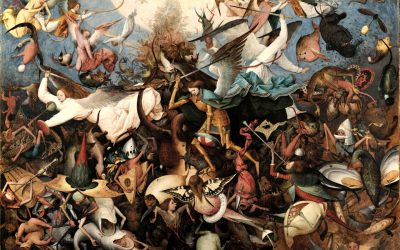
It is not surprising to find oneself drawn to “the Revelation from Jesus Christ … to his servant John” (Rev 1:1) at a time such as this. To be sure, the Revelation is a strange book with bizarre creatures and indecipherable episodes re-imagined and re-purposed from an ancient vault of Biblical apocalyptic imagery. And, as GK Chesterton so aptly put it; “Though St. John the Evangelist saw many strange monsters in his vision, he saw no creatures so wild as one of his own commentators.” Yet instinctively we sense, if the reader would “heed” (1:3) the words in this book, navigational directives will emerge by which to surmount tumultuous times. Herein lies the allure of the apocalyptic.
Advent reflection: Son of David

Advent reflection: Son of David

On this third Sunday of Advent, in keeping with the Advent theme of longing and waiting, or promise and fulfilment to use the Biblical categories, our main text for reflection is 2 Samuel 7:1-17, the account of David’s desire to build God a “house.” Our New Testament counterpart is a slightly unusual choice, Romans 1:1-7, as it gives peculiar expression to the ultimate fulfilment of God’s response to David through the prophet Nathan, that he instead would be the one to build David a “dynasty.”

The world well staged? Creation and culture revisited

The world well staged? Creation and culture revisited

Culture is thus both human achievement and divine gift. It is, to stay with our metaphor, the performance of our ultimate beliefs and values—the inevitable staging of our religion. If this is so, it is the task of theology pre-eminently to interpret and articulate the meaning of the cultures we inhabit; and to suggest the way of (biblical) wisdom throughout the stages of life.

On being creative

On being creative

Artists are not fatally cast upon their inner brilliance (or lack thereof), but called to the diligent use of their peculiar insights into the givenness of what God has created; a world budding with potentiality in anticipation of his image-bearers to explore and celebrate.

Secularization’s Crisis: What Africa has to offer the world

Secularization’s Crisis: What Africa has to offer the world

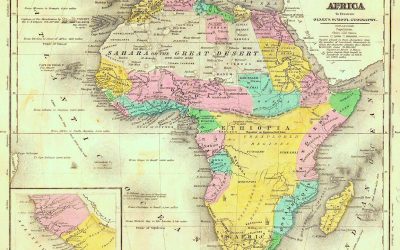
The notion of the secularisation of (Western) society is a fascinating subject in its own right, with both supporters and detractors of its central thesis; that our society is no longer concerned with religion the way it used to be. Secular, from saeculum (generation, or age) in its Christian Latin usage denotes ‘the world’, as opposed to sacred, from sacer (holy), that which is consecrated to God. Back in 1966 Bryan Wilson called it “the process in which religious thinking, practice and institutions lose social significance”, and Anthony Giddens, more recently as “the process where religion loses its influence over the various spheres of social life”. Or, as Max Weber more imaginatively called it, “the disenchantment of the world”.

Inconclusively Offensive?

Inconclusively Offensive?

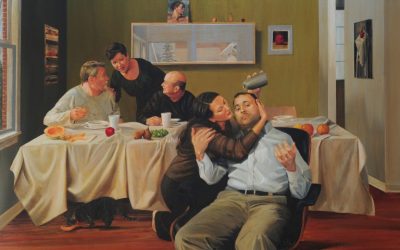
The dinner spectacle John describes for us in his gospel, even though remote, still manages to offend us (though not as much as the original guests), but, we’re not quite sure how—or, why, we are offended. We can determine this however, that the story gives us a picture of extravagant devotion.